Takeaway #1 – area plans are where planning departments can make real change happen.
Takeaway #2 – these projects often get overlooked or underplayed
Takeaway #3 – we need to get clear on what makes an area plan successful
To most people, the essential work of urban planning comes down to three basic practices:
- Policy-making, where we create regulations (e.g., a zoning ordinance) that govern the built environment.
- Policy administration, where we set up, manage, and improve the processes that implement those policies—most commonly through development review.
- Long-range comprehensive planning, where we create and/or modify a vision of the future for large geographic areas—be it a city, county, or region.
Again, these are the three most-common practices that people associate with urban planning. By “people,” I mean anyone who comes into contact with this work. Residents, elected officials, even some of our colleagues in the organization. All three of these functions are important but there is a fourth area of our practice that deserves much more attention and investment: small area plans.
On the east coast, I often hear these referred to as “sector” plans . On the west coast, I hear them called “subarea” plans . Occasionally, these are known as “corridor” plans, too . Or “neighborhood” plans. Or “community” plans.
The nomenclature is slippery and I think that’s part of the reason these efforts gets overlooked. It’s easy to think that each subarea-corridor-neigborhood-sector plan is unique unto itself, a bespoke artisanal creation beyond compare. Seeing them in such a way will lead us to think there are no preset rules here, no singular collection of best practices. Without its own set of categorical best practices, these small area plans often regress into miniature comprehensive plans, requiring just as much time to produce and delivering the same broad scope and fuzzy vision. Sure, there may be a few subtle changes to future land use categories. Maybe a new, custom-made overlay zone, too. But again, without its own set of best practices, small area plans feel like big area plans.
Is that what success looks like?
Maybe. It depends on the problem you’re trying to solve. And it is in the nature of the problem that we find the real value of small area plans.
Meaningful, context-sensitive, geographically-narrow problems require similar solutions. Small area plans deliver that. Often times, these efforts are initiated as a way of compensating for some pre-existing plan that is no longer relevant to a hyperlocal, unforeseen needs. There are lots of archetypes here. I’ll offer two for example.
Archetype 1 – Rural Area Feels Growth Pressure
In the outer fringe of a community, growth is emerging in ways the overarching comprehensive plan did not anticipate. Lots of houses are being built on small lots. The “character” of the countryside is eroding quickly. The existing residents are unhappy with this and seek a better, custom-tailored solution to replace the inadequacies of the existing plans and policies. A small area plan project is thus born.
Montgomery County, Maryland does a lot of this. One of their most recent plans is for an area called Ashton Village. You can see the plan here: <link>
Invariably, this archetype results in solutions that rhyme with Randall Arendt’s classic book “Design with Nature.” You will find new plans for conservation subdivisions, small-scale cluster development, and descriptions of a new vision that involves a “village center” or “hamlet” concept. Open space is preserved, greenbelts surround the community, and all the demand for housing and commerce gets funneled into a new tiny town. The general idea is less about limiting the growth and more about managing it into a particular style and function that befits the existing surroundings.
On the flip side, we find …
Archetype 2 – Inner Ring Seeks Urbanization and Reinvestment
Somewhere between the bustling downtown and the second ring of suburban growth, there is an inner ring that has been leap-frogged over the decades. Its thoroughfares are lined with vacant malls and third-generation land uses, such as a former Pizza Hut that’s been turned into pawn shop.
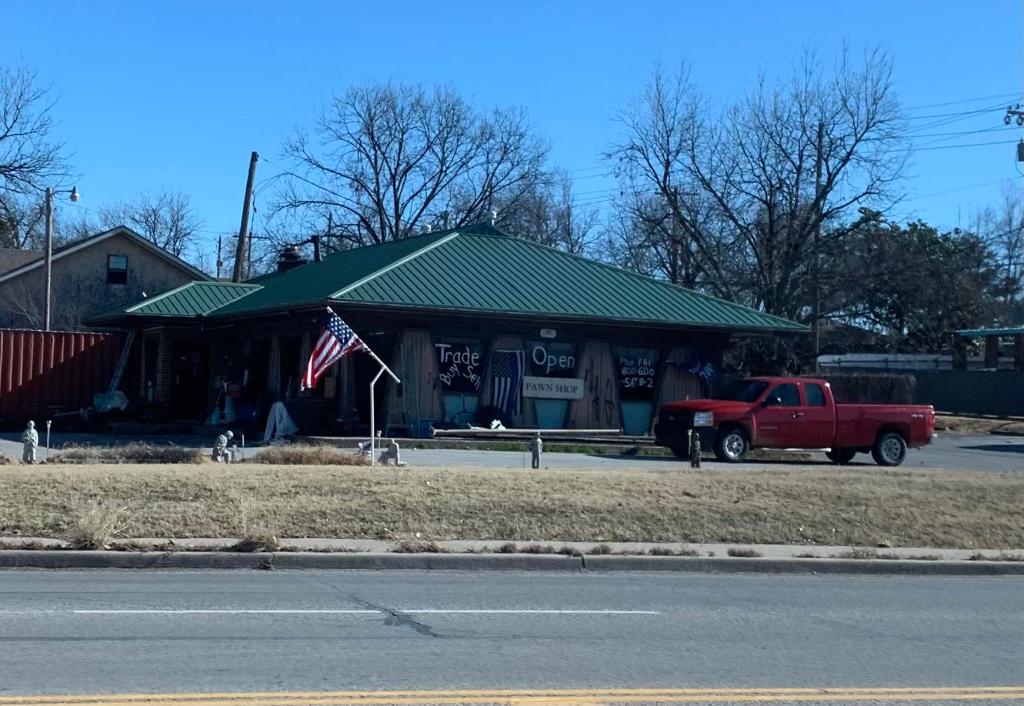
The residents who live here have the worst of all worlds—all the traffic and noise of an urban environment without the destinations and amenities that make it worthwhile. Everyone who can afford to leave has done so and the broader community often forgets that people live there anymore. Pedestrian infrastucture is lacking. Stroads (link) course through the fabric, leaving old neighborhoods isolated in a sea of asphalt.
All this is the product of exploitative, single-use greenfield development. It’s the way we did things for decades. And just as the people on the rural edge want to prevent it from creeping into their neighborhood, the people in the inner core are eager to see return. Along with the amenities and conveniences that life is supposed to provide them in this area.
The only way to turn the tide is to do something that is nigh-opposite of Archetype 1. The inner ring needs to harness growth, have it diverted to them, and let it be capitalized to the fullest.
That means creating broader allowances for mixed use, vertical development, reduced parking standards, reduced tap fees. It also means public investment into complete streets, parks, sewer and water capacity, community centers, and other services. A great example of this approach is found in an old plan created for the Cherrydale Area of Greenville, South Carolina. Fair warning – it’s an old plan. But it’s also as good as I could make it. <link>
It was my second area plan and the first to develop new policies and street improvements to make the area ready and able for reinvestment and better urban environments. When the vision is realized (someday!), this inner ring area will feel more like an extension of the city’s famous downtown. It will change significantly.
Archteype 1 is about preserving the existing character and function.
Archetype 2 is about changing it, knowing that what-once-was cannot be again, so that it evolves into something better.
All of this is fine. In many cases, these approaches are effective. But they are also incomplete. The real power of a small, precise plan is lost if it only results in a change of zoning regulations. And from what I can tell, that is the case for both plans. There is so much more that can, and should, be done. Zoning cannot be the hammer that turns every problem into a nail. And we cannot think of these projects as miniature comp plans where we only deal in land use and cast general allusions to capital improvements that maybe-oughta-someday-hopefully occur.
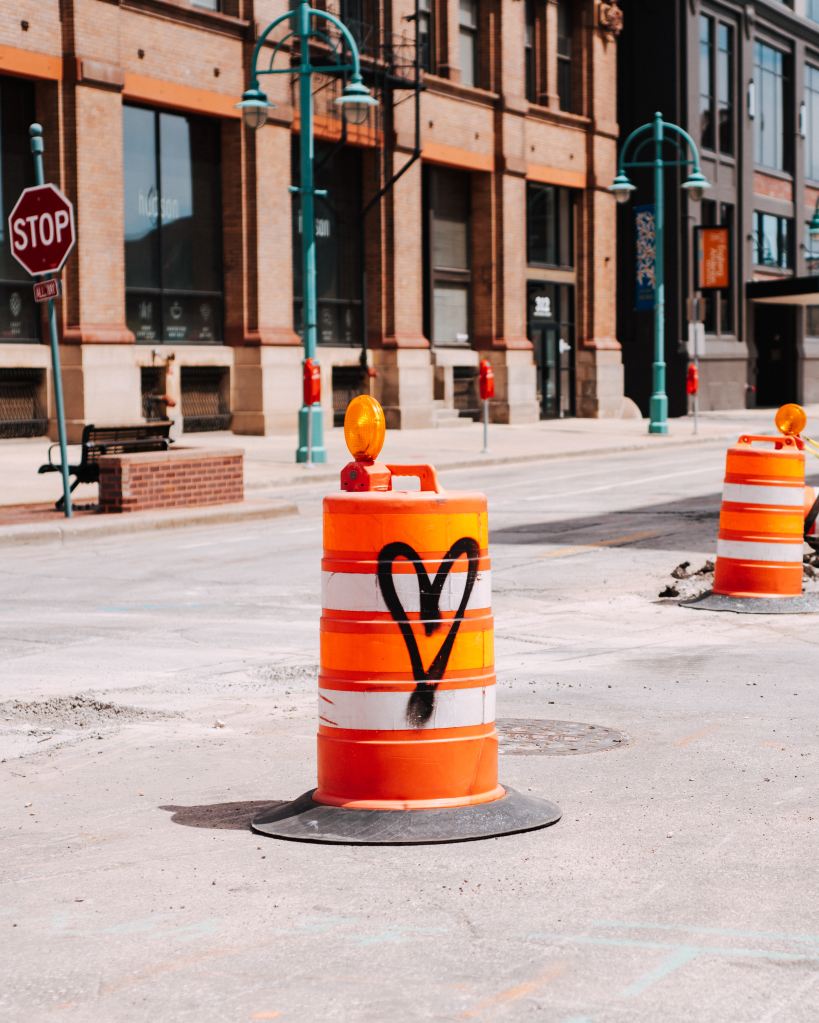
These plans usually take years to create. And hundreds, often thousands, of people are involved. And if we’re mobilizing that much time and effort, it must be rewarded with orange barrels and public construction. Otherwise, we’re setting ourselves up for the meager hope that the private sector (land developers, builders, property owners) will do it all for us.
Let’s not leave it to everyone else.
Let’s bring back the physical planning aspect and spark a real change in the public realm.
Let’s summon the Orange Barrels of Progress.
 Parameter